Terrestrial phenology and stream metabolism
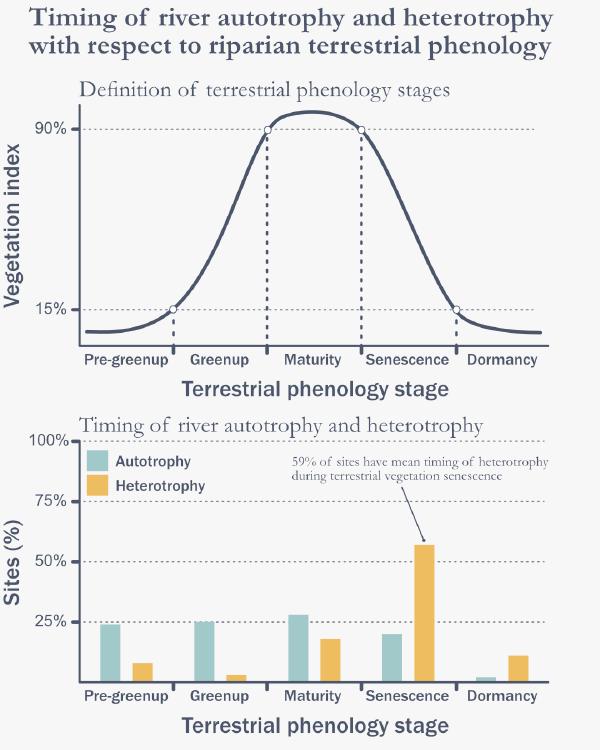
A look at the timing of river metabolism with respect to terrestrial phenology

“Phenology is the study of the timing of recurrent biological events, the causes of their timing with regard to biotic and abiotic forces, and the interrelation among phases of the same or different species. – Lieth (1974)”
Lieth, H. (1974). Phenology and seasonality modeling (H. Lieth Ed.). New York: Springer.
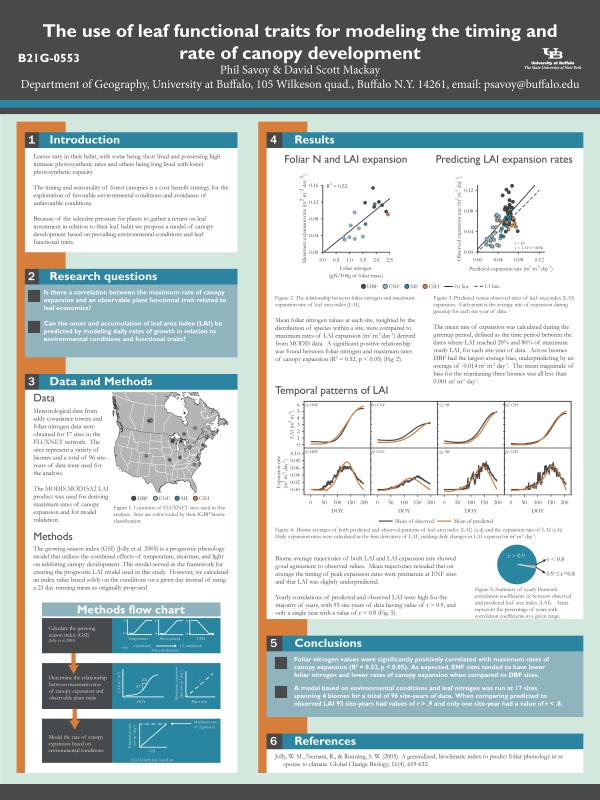
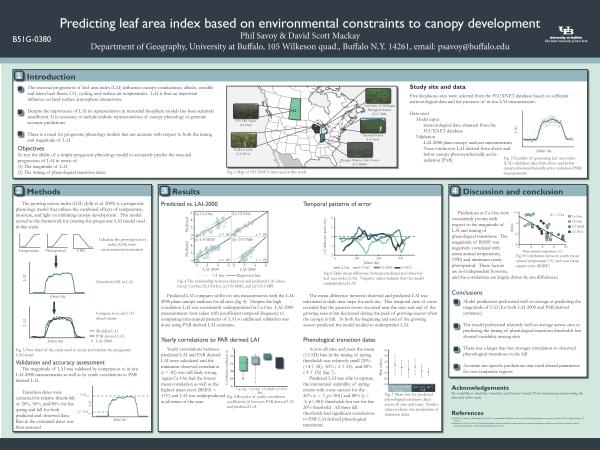
For vegetation this definition of phenology not only includes discrete life cycle events such as flowering or senescence, but also continuous changes of forest canopies. As a result, vegetation phenology has important implications for the timing of resource availability or carbon cycling within ecosystems. Phenology is related to externtal environmental conditions such as temperature or light availability and the response to these conditions is mediated by the physiology of plants.
My interest in vegetation phenology has centered around incorporating more representation of plant physiology into phenological models. By including these processes it is possible to more accurately reproduce how plant biology and environmental conditions interact on the landscape.